
A vacuum ceramic tube shell is a critical electronic component housing. Due to its high-temperature resistance, corrosion resistance, excellent insulation, high vacuum, and high mechanical strength, it is widely used in encapsulating high-end semiconductor components, national defense, power transmission, and industrial power devices (such as vacuum switches, high-frequency high-power electron tubes, and large-scale integrated circuits).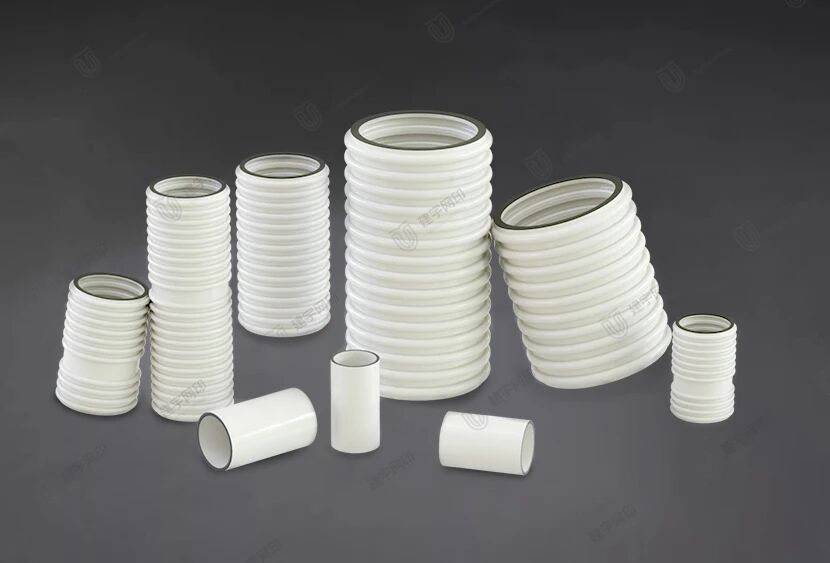
1.Structure and Manufacturing Process
A vacuum ceramic tube shell consists of a ceramic tube and a metallized coating. The manufacturing process is complex, and any negligence in the process will cause product defects. Currently, most domestic production focuses on small tubes with diameters less than 180mm, while the large-diameter tubes required by the market mostly rely on imports.
The main process flow includes ceramic powder mixing, forming, high-temperature sintering, metallization, and glaze firing. Among these, the metallized coating is the key to sealing, requiring excellent air-tightness and tensile strength. Therefore, the metal coating must have uniform thickness and high consistency.
2.Technical Advantages
As a method with a relatively simple process, low cost, and high efficiency, thick film screen printing has been widely used in the metallization of vacuum ceramic tube shells.
Compared with manual coating, thick film screen printing can ensure uniform batch printing with a film thickness deviation controlled within ±5%, thereby meeting the high requirements for metallized coatings on vacuum ceramic tube shells.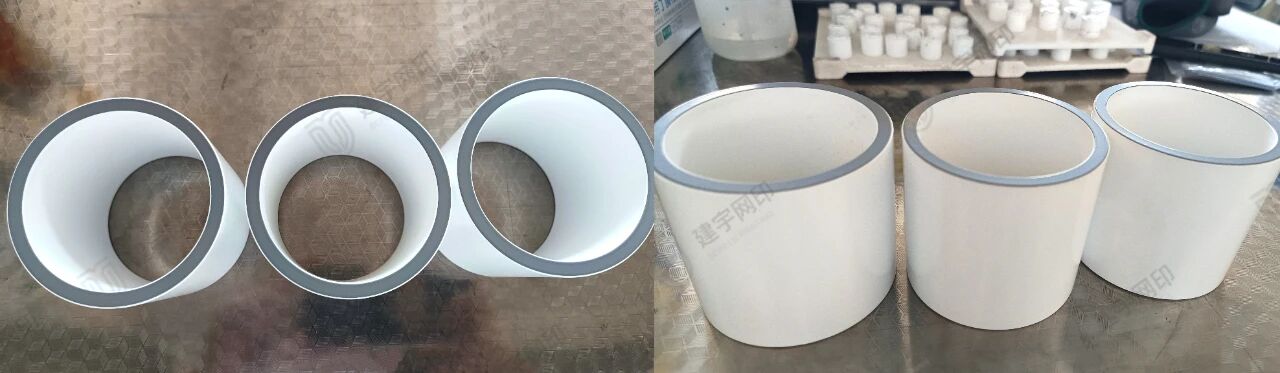
3. Process Details
Printing Environment: The printing environment should be kept clean and dust-free to ensure printing quality.
Printing Requirements: When printing molybdenum-manganese (Mo-Mn) paste on one or both ends of the ceramic tube shell, the coating must be uniform. The paste must not sag onto the inner or outer walls, and there should be no burrs, pinholes, or white spots.
Screen Requirements: Composite screens are used to meet the requirements for printing precision and coating uniformity.
Printing Equipment: High-precision thick film screen printers (such as JYUTEC IC-340B shown in the figure) are used, along with customized vacuum switch tube fixtures (suitable for diameters of 5mm-350mm and heights of 5mm-240mm) to ensure printing accuracy and stability.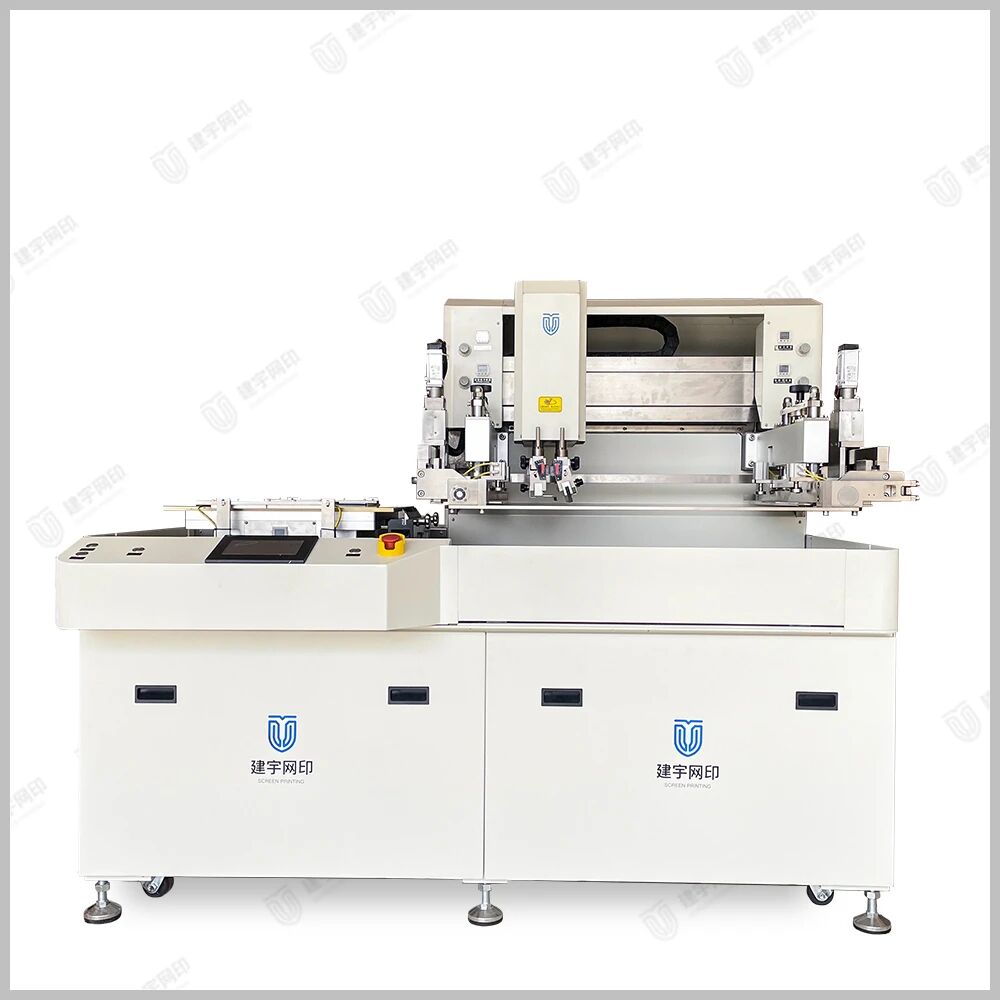
Automation: To meet the customer's mass production needs, we have customized a fully automatic printing production line for vacuum ceramic tube shells. This line includes manual loading/unloading stations, a preheating loading unit, a printing unit, a baking unit, and a cooling unit. It can handle multi-size tubes (diameter 5mm-350mm, height 5mm-240mm). The printing unit adopts platform lifting for high efficiency and stability; the print head uses floating printing with stable pressure to ensure uniform film thickness.
Drying: Drying is performed after printing to ensure the coating is firmly attached to the surface of the ceramic tube shell.
4.Conclusion
With the rapid development of technology and continuous growth in market demand, the application fields of vacuum ceramic tube shells will become broader. We will continue to insist on technological innovation and process upgrades to provide more high-precision, highly efficient thick film screen printing equipment and technical support for the industry. At the same time, we will strengthen cooperation and communication with upstream and downstream enterprises to jointly promote the sustainable development of the industry.
#ThickFilmPrinting #VacuumCeramic #ScreenPrinting #SemiconductorPackaging #JYUTEC #Manufacturing