A hydrogen fuel cell is a power generation device that directly converts the chemical energy of hydrogen and oxygen into electrical energy. Different types of fuel cells have been developed based on the ions conducted by the electrolyte or their operating temperatures. Among them, the proton exchange membrane fuel cell (PEMFC) is one of the most widely used types. (Figure1. Types of Hydrogen Fuel Cells — Classified by Electrolyte Type)
The electrodes are essential components for electrochemical reactions. They facilitate the oxidation of hydrogen and the reduction of oxygen, enabling the conversion of chemical energy into electrical energy.
Anode: Consists of an anode catalyst layer and an anode gas diffusion layer. It is responsible for the hydrogen oxidation reaction.
Cathode: Consists of a cathode catalyst layer and a cathode gas diffusion layer. It is responsible for the oxygen reduction reaction.
Proton Exchange Membrane (PEM): Located between the anode and cathode, it conducts protons while blocking electrons.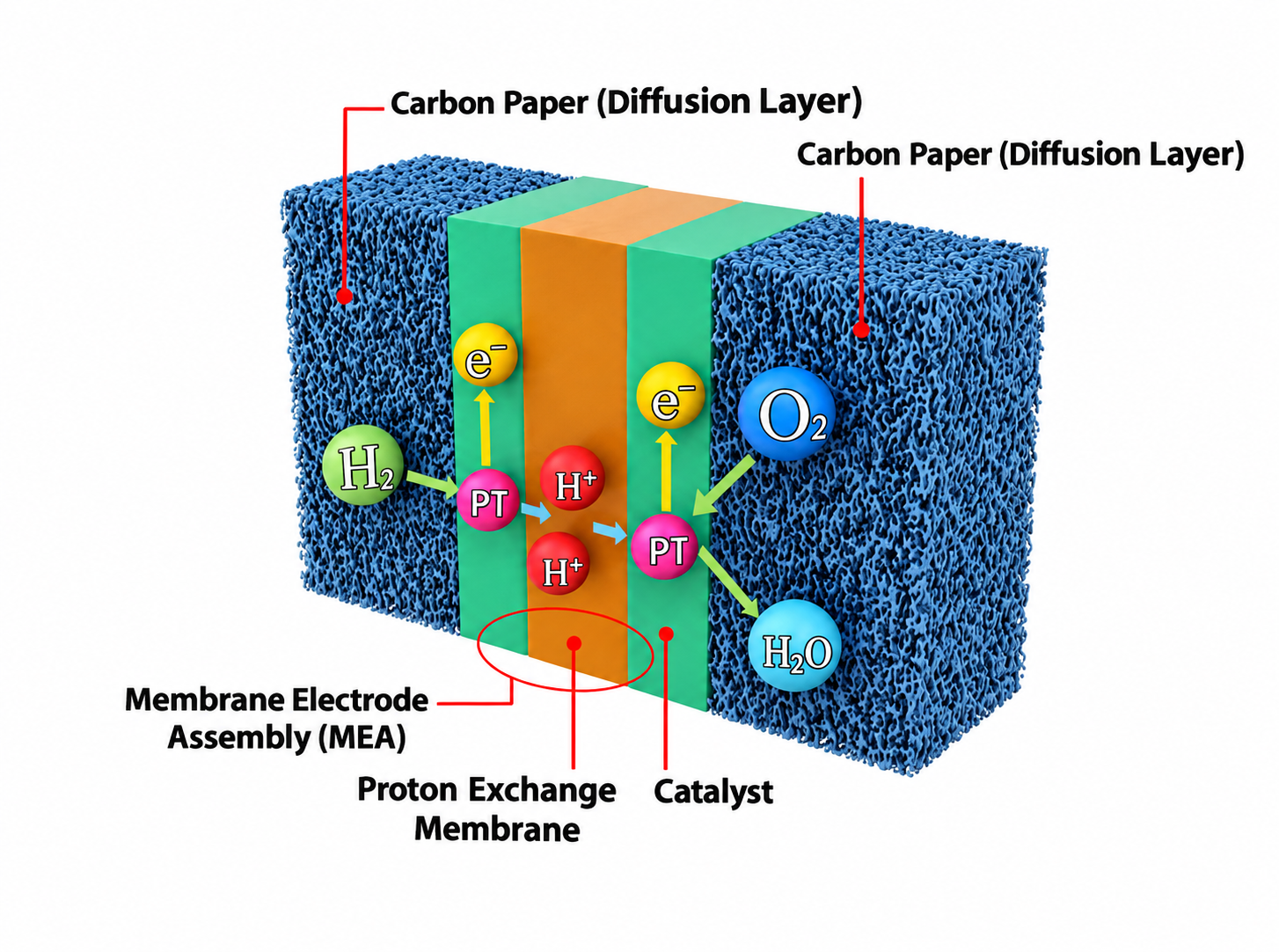
(Figure2. PEMFC Electrode Structure Diagram)
Thick film screen printing is widely used in the fabrication of anode and cathode catalyst layers for small-scale PEMFC membrane electrode assemblies (MEAs). Its advantages include a mature process, ease of operation, high production efficiency, uniform film thickness, and high printing precision.
In this process, multiple layers of anode and cathode catalyst inks are printed onto carbon paper, which serves as the gas diffusion layer (GDL). Key requirements include good surface uniformity, precise film thickness control, coating consistency, and accurate multilayer registration.
The typical printing process involves the following steps.
High-precision screens are prepared according to the required printing patterns and dimensions.
Suitable materials are selected, including a catalyst such as platinum-on-carbon (Pt/C), deionized water, an organic solvent such as methanol, and a binder such as an ionomer solution.
① Anode ink formulation:
Approximately 15 wt% Pt/C catalyst
Approximately 40 wt% deionized water
Approximately 40 wt% methanol-based organic solvent
Approximately 5 wt% ionomer solution as the binder
② Cathode ink formulation:
Approximately 20 wt% Pt/C catalyst
Approximately 35 wt% deionized water
Approximately 35 wt% methanol-based organic solvent
Approximately 10 wt% ionomer solution as the binder
A high-precision thick film screen printer is essential for maintaining process stability and controllable printing accuracy.
The IC-200A-CCD semi-automatic screen printer features a CCD vision alignment system for accurate positioning and multilayer registration. Its dedicated printing system provides reliable squeegee pressure and uniform film deposition, with a specified film thickness deviation of ±5%.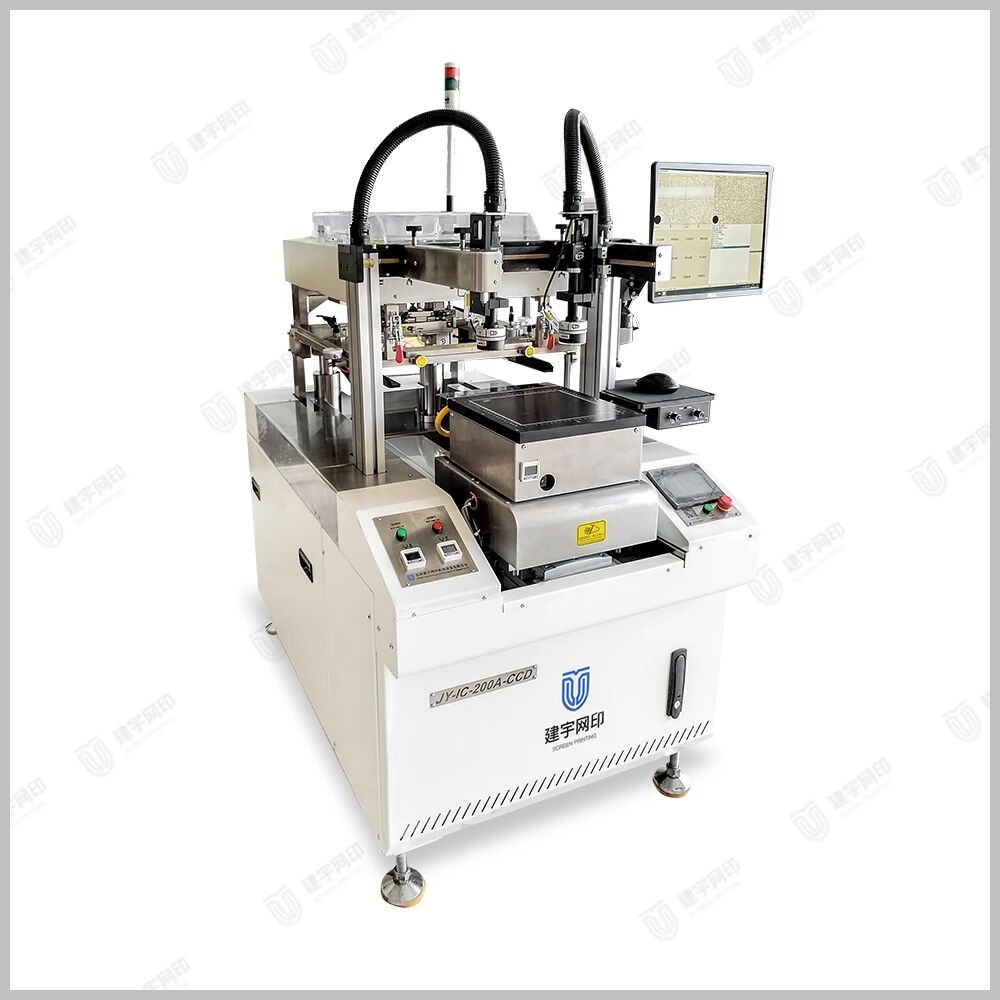
These features help improve printing consistency and process repeatability.
A high-precision thick film screen printer is used to deposit multiple layers of anode and cathode catalyst inks onto the carbon paper.
To achieve uniform coatings, consistent film thickness, accurate positioning, and appropriate drying conditions, the following parameters must be carefully controlled:
Printing speed: Affects ink transfer, coating uniformity, and printing stability.
Screen gap: The distance between the screen and the substrate, which influences ink transfer and pattern definition.
Ink supply: Must be properly controlled to maintain consistent ink transfer throughout the printing process.
Precise adjustment of these parameters helps improve coating quality and multilayer printing consistency.
Common defects include cracking, peeling, and uneven film thickness.
Potential causes include an unsuitable ink formulation, excessive substrate suction, and insufficient equipment precision.
Recommended measures include:
Optimizing the catalyst-to-solvent and binder ratios.
Adjusting the substrate vacuum holding system to prevent excessive suction.
Selecting high-precision printing equipment.
Systematically checking and optimizing printing speed, screen gap, and ink supply.
A controlled and repeatable printing process is essential for reducing defects and improving production consistency.
After each printing pass, the deposited layer should be dried according to the material characteristics and process requirements before the next layer is printed.
Proper drying and accurate registration help maintain multilayer alignment, structural stability, and coating consistency throughout the manufacturing process.
High-precision thick film screen printing is an important manufacturing process for producing functional layers in hydrogen energy technologies. Its printing efficiency and process controllability can contribute to improved product consistency and manufacturing quality.
Beyond PEMFC electrode fabrication, thick film screen printing can also be used for:
PEMFC bipolar plate sealing: Printing sealing materials onto designated areas of bipolar plates, where compatible materials and processes are required.
Solid Oxide Fuel Cells (SOFCs): Printing electrodes and other functional layers.
Solid Oxide Electrolysis Cells (SOECs): Depositing electrodes and functional layers for high-temperature electrolysis applications.
As materials, printing processes, and equipment continue to advance, high-precision thick film screen printing is expected to support a wider range of manufacturing applications in the hydrogen energy sector.
High-precision thick film screen printing offers a practical solution for the controlled deposition of catalyst inks and functional materials in hydrogen energy applications. With appropriate ink formulation, precise parameter control, and reliable printing equipment, manufacturers can improve coating uniformity, multilayer registration, and process repeatability.
Looking for a high-precision thick film screen printing solution for your functional materials? Contact JYUTEC to discuss your application and equipment requirements.
#ThickFilmPrinting #PEMFC #FuelCellTechnology #HydrogenEnergy #ScreenPrinting #PrecisionManufacturing